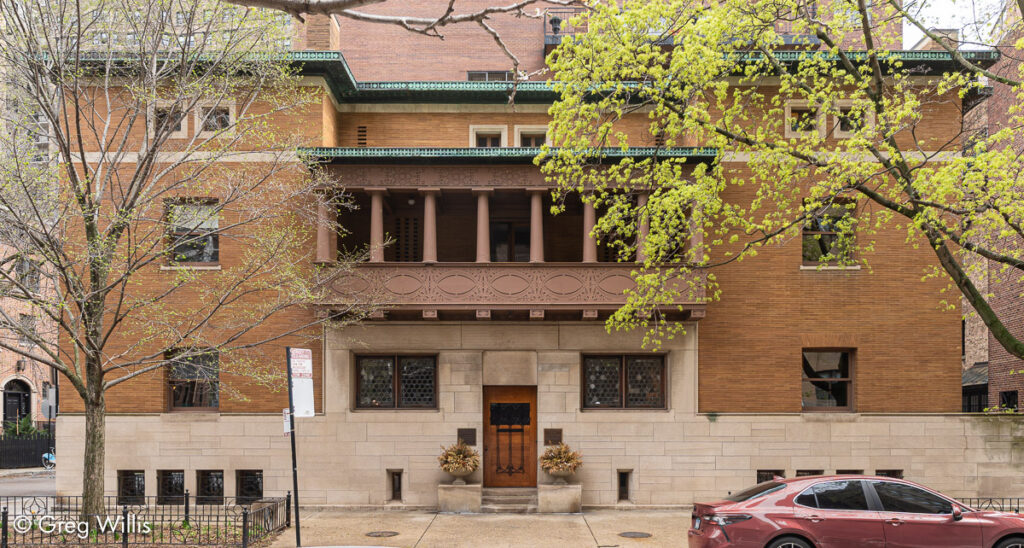
Back in the early 1890s, when Louis Sullivan employed a certain Frank Lloyd Wright, they worked together to design the Charnley–Persky House. Sullivan primarily designed large commercial buildings, so this is one of his few houses. FLW designed a lot of houses, but this is one of the first of his designs where you can really see the germ of his Prairie Style. And the entire design is fascinating because you can observe both of their styles blend and complement each other here.
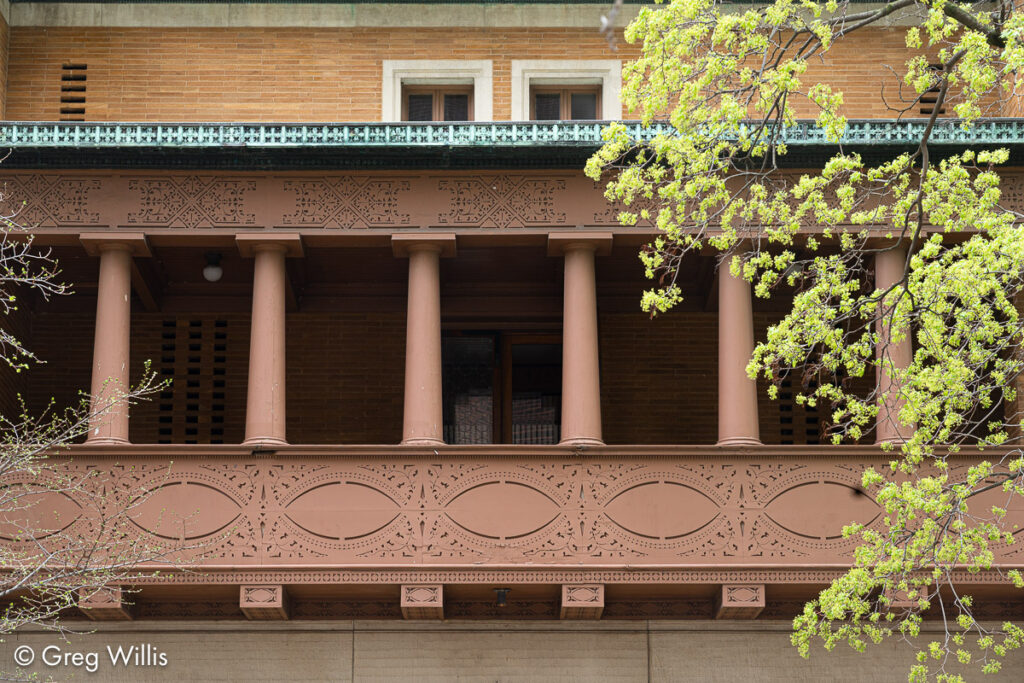
What surprised me about the house is just how shallow it is. James Charnley, a wealthy Chicago lumber baron purchases a large lot, but sold off most of it so they kept just the corner — making the lot 83 ft (25 m) by only 35 feet (11 m). The exterior shows that Sullivan-Wright collaboration: the horizontal lines, the use of long Roman brick, and the square window openings of Wright are paired with the sinuous decoration and the symmetry of Sullivan.
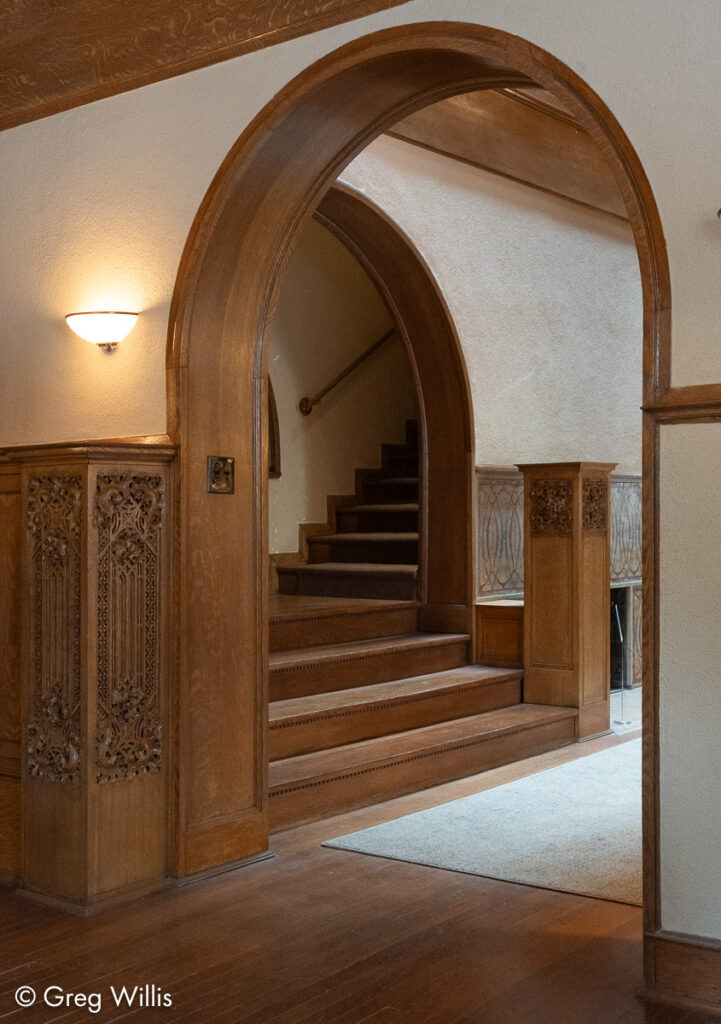
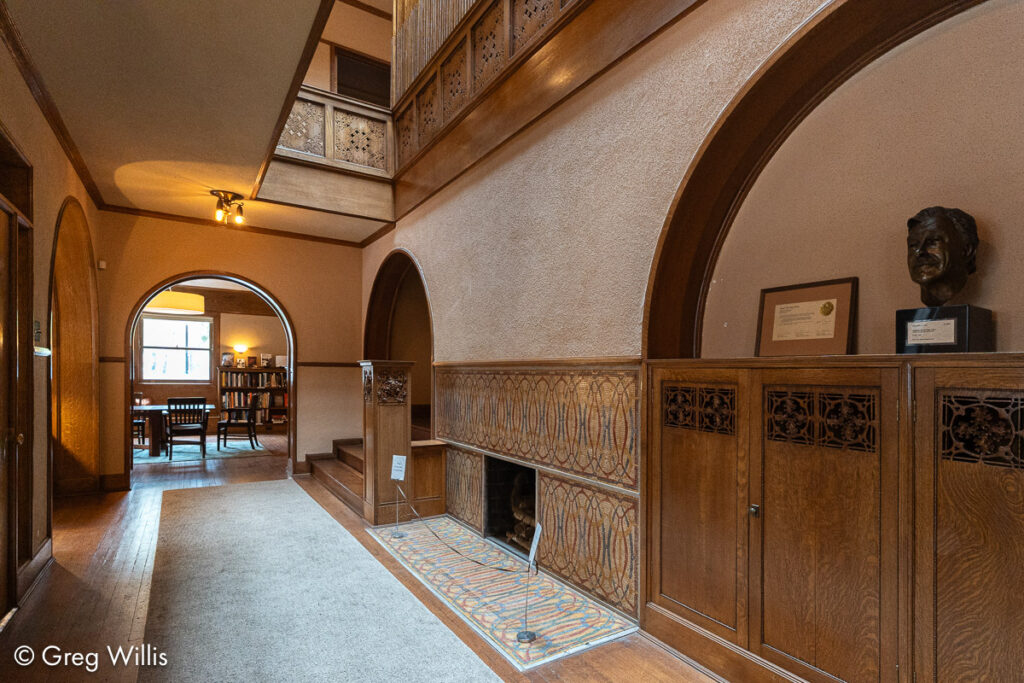
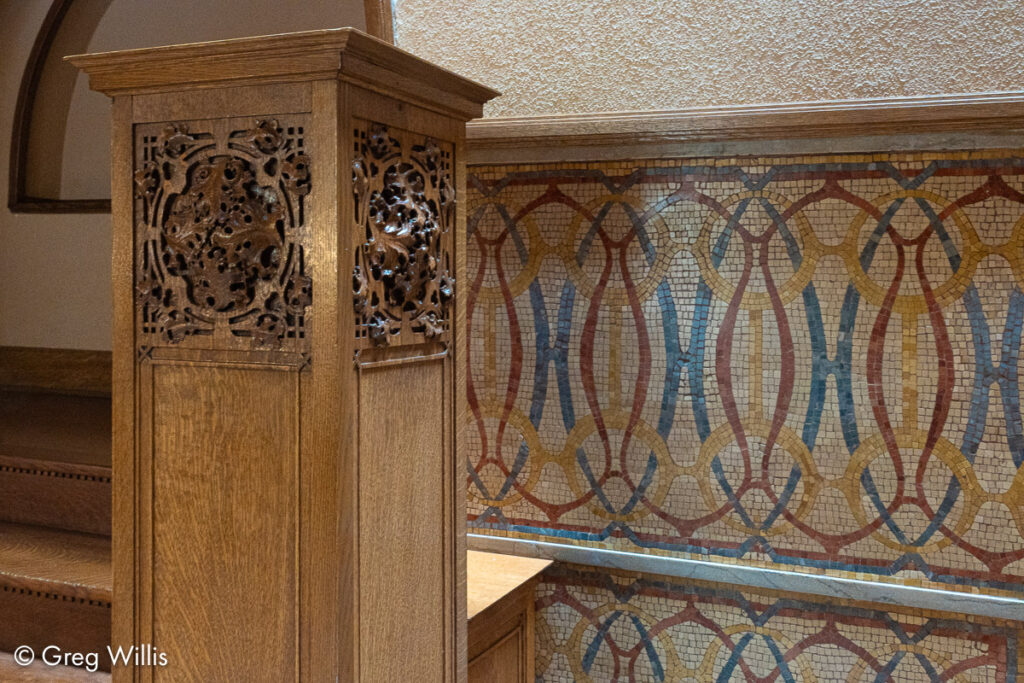
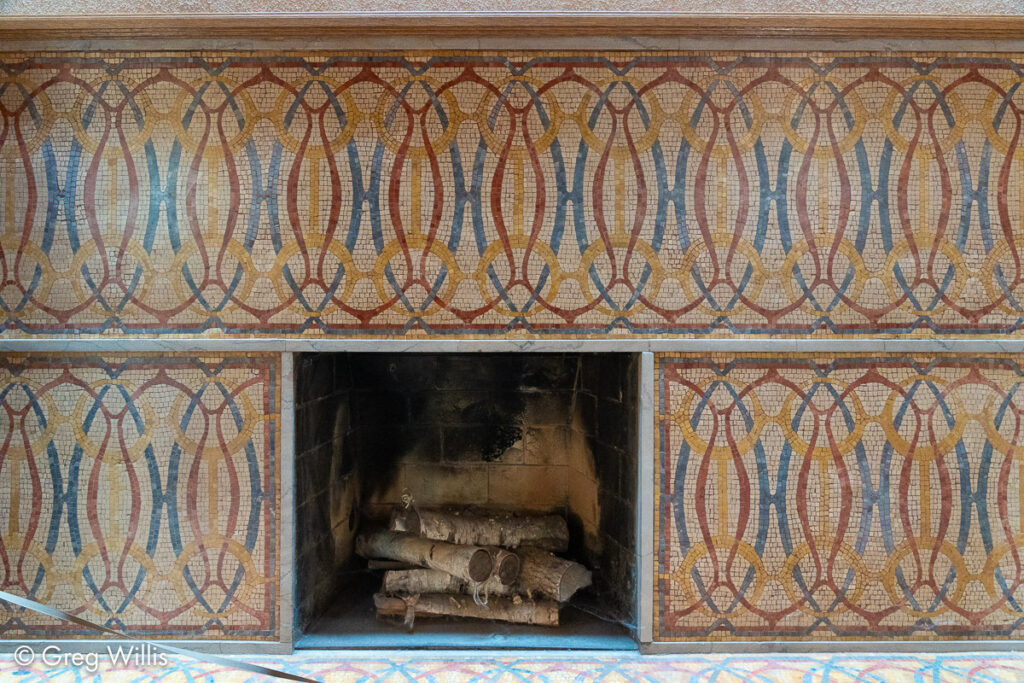
The collaboration continues inside. The six arches in the main hall (Sullivan, in my opinion) break up the horizontal datum line (FLW) that ties together the entire level. While the colorful serpentine fireplace design (S) contrasts with the pervasive oak wood (FLW).
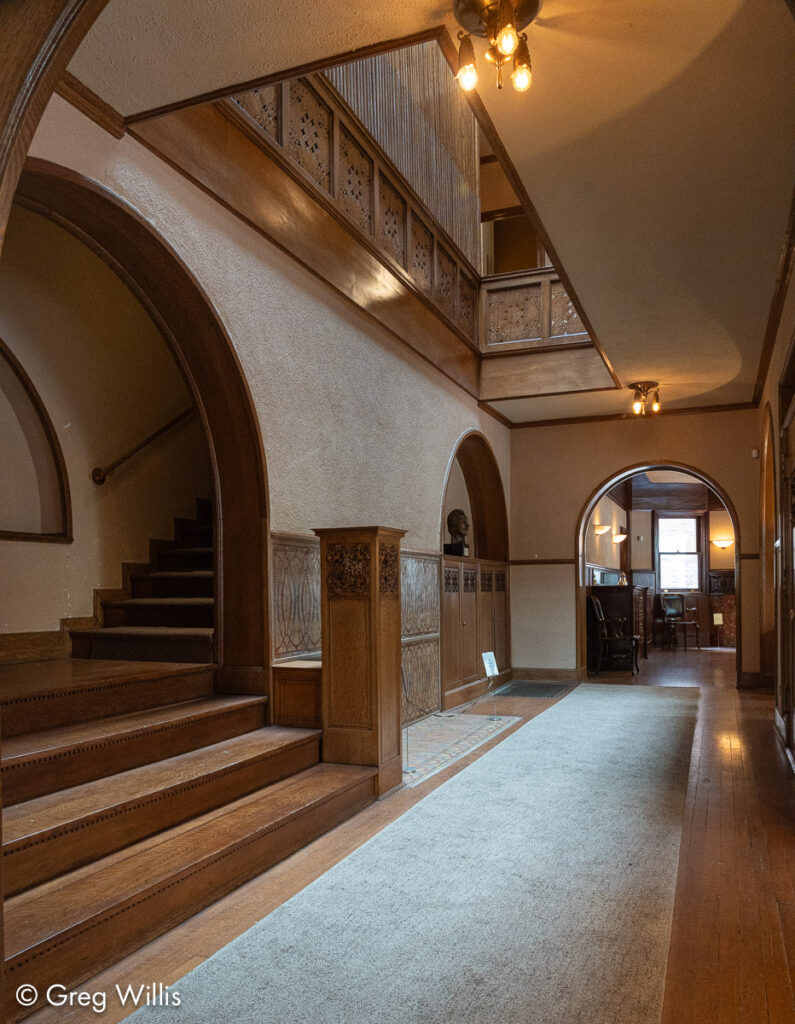
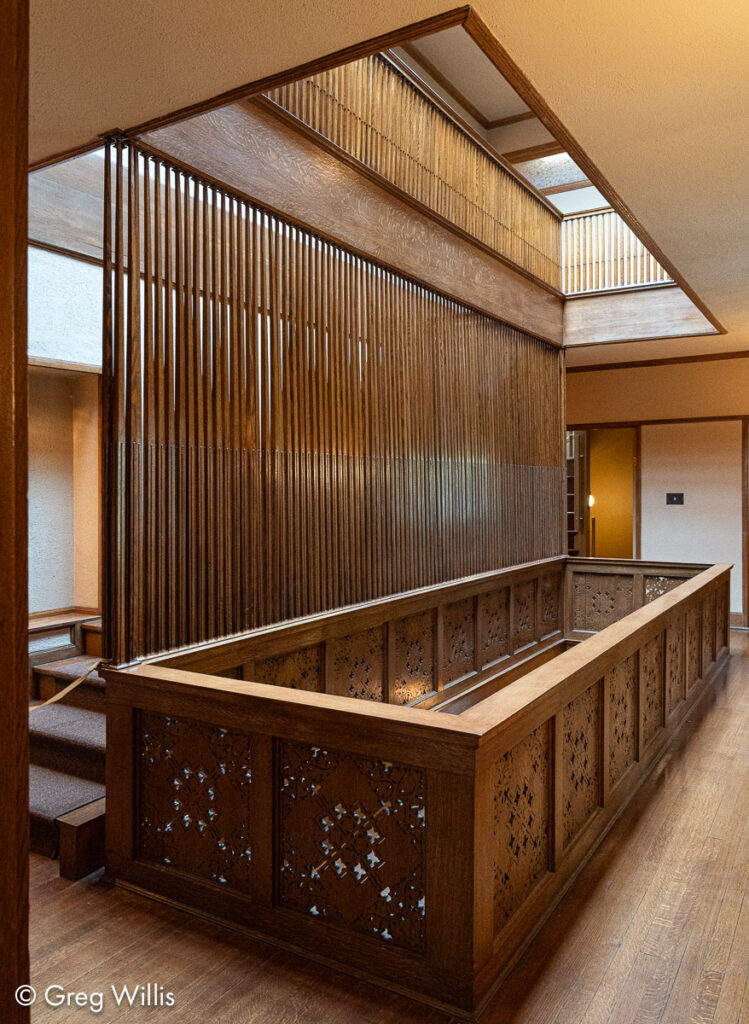
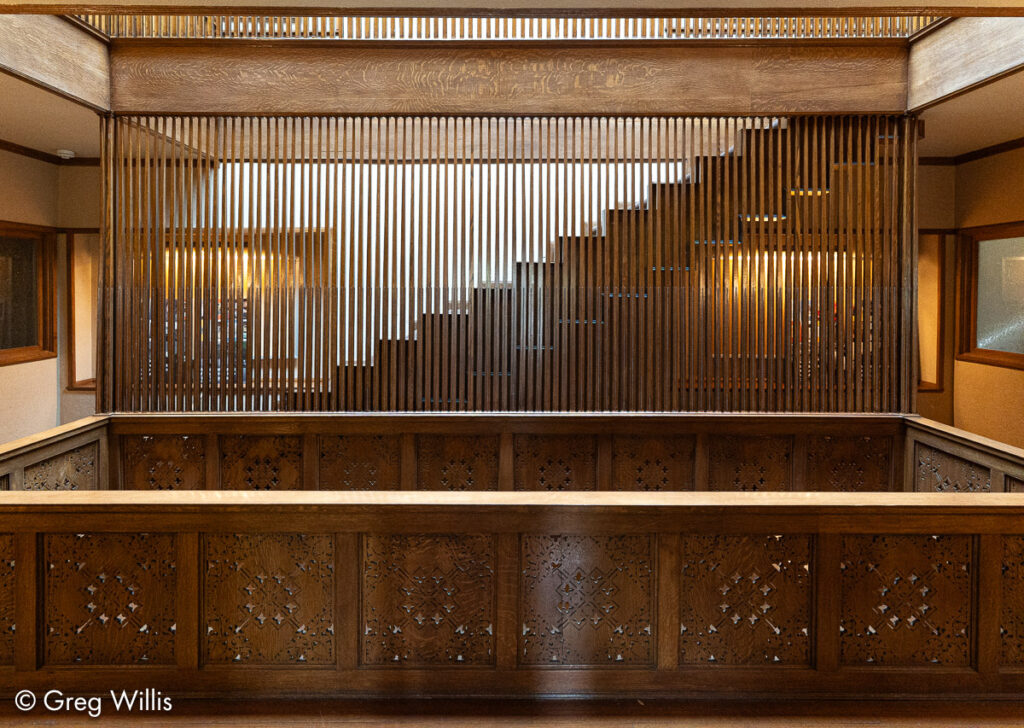
In the upper hall the screen of vertical wooden rods that separates the stairs to the top floor is Wright, but the panels in the light well balustrade seems Sullivan.
And the fireplace in the main hall? Only Wright — a fireplace fanatic — would put a fancy hearth where no one could sit and enjoy it.
Shortly after their collaboration on the Charnley–Persky House, Sullivan fired Wright for taking freelance jobs. But after this house their careers went in separate directions: Sullivan struggled to get large projects after the Depression of 1893, but Wright stayed small designing houses and, as we know, ultimately became a household name.